
EDB Postgres AI Embeds Semantic Layer Natively, Streamlining Agentic AI Governance for Amazon Bedrock
Key Enterprise Leader Takeaways
- Architectural Shift: EDB Postgres AI integrates the semantic layer directly into the operational database, eliminating the need for separate systems and simplifying enterprise AI architecture
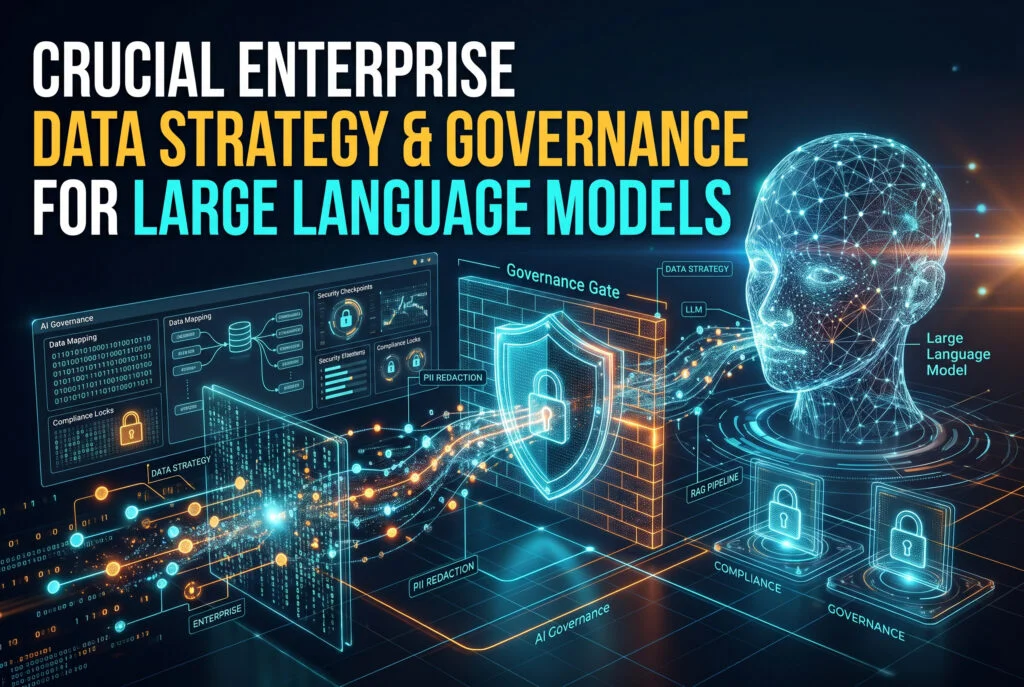
- Native Governance: Leverages existing Postgres primitives like GRANT, RLS, and COMMENT statements for robust, granular access control and business definition, ensuring data security for agentic AI
- Enhanced Accuracy: Semantic Knowledge Bases (SemKBs) and semantic aliases, built on native schema metadata, significantly improve text-to-SQL accuracy and consistency for agents
- Operational Efficiency: Centralizing data, meaning, and governance within Postgres reduces synchronization overhead and provides immediate auditability via OpenTelemetry traces
- Scalability & Extensibility: The approach seamlessly extends to analytical workloads (Iceberg, Delta Lake) and federated sources via FDWs, future-proofing data access for evolving agent needs.
The AI Strategic Shift
This development marks a significant strategic pivot in how enterprises can deploy and govern agentic AI. By embedding the semantic layer directly within the operational EDB Postgres database, organizations can eliminate the architectural complexity and synchronization challenges associated with separate knowledge graphs or data virtualization platforms. This approach leverages existing database primitives for robust governance, ensuring that AI agents operate within established security boundaries, which is critical for compliance and risk mitigation. For C-Suite executives, this translates to faster time-to-value for AI initiatives, reduced operational overhead, and a more secure, auditable path to data-driven automation.
Strategic Analysis
The integration of a semantic layer directly into EDB Postgres AI, particularly its seamless orchestration with Amazon Bedrock AgentCore, represents a profound architectural simplification for enterprise AI. Traditionally, semantic layers have existed as separate systems—knowledge graphs, data virtualization platforms, or dimensional models—each requiring its own deployment, synchronization, and governance mechanisms. This new paradigm, where business meaning, join paths, and access rules are defined and enforced within the operational database itself, fundamentally alters the cost-benefit equation for strategic AI deployment.
The core advantage lies in leveraging native RDBMS primitives. Postgres COMMENT ON statements become the authoring surface for business definitions, foreign keys automatically crawl into join paths, and existing GRANT statements and row-level security (RLS) policies provide granular, auditable access control. This eliminates the “second system problem” where metadata and security policies must be duplicated and kept in sync across disparate platforms. For enterprise architects, this means a dramatically reduced attack surface, simplified compliance, and a single source of truth for both data and its semantic context. This native integration also enhances the reliability of agentic AI, as the semantic layer is always consistent with the live operational data, reducing the risk of agents generating inaccurate or unauthorized queries. This directly addresses challenges in achieving precision accuracy for enterprise AI agents.
Furthermore, the Model Context Protocol (MCP) endpoint, shipping with AIDB, provides a standardized, secure interface for external agents like those running on Amazon Bedrock AgentCore. This allows for identity propagation from the end-user through AgentCore to the specific Postgres role, ensuring that every SQL execution is governed by established database permissions. The capture of OpenTelemetry traces within the aidb_otel schema offers unparalleled auditability, allowing organizations to track agent decisions and data access patterns with ordinary SQL. This level of transparency is crucial for regulated industries and for building trust in autonomous systems. The ability to define recurring questions as semantic aliases further boosts agent efficiency and consistency, akin to achieving 300x efficiency and zero-shot transfer for autonomous systems by standardizing common queries.
This approach is not just about simplification; it’s about empowerment. Data teams can define semantic context using familiar SQL constructs, while AI agents gain a robust, governed understanding of the data without complex intermediary layers. This accelerates the development and deployment of intelligent applications, enabling businesses to derive insights and automate processes directly from their most current operational data. The extensibility to analytical accelerators like PGAA and foreign data wrappers ensures that this semantic foundation can scale with evolving data landscapes, whether on-premises or in the cloud.
The Bottom Line and ROI Potential
The core takeaway for industry leaders is clear: the semantic layer for agentic AI no longer needs to be an external, complex system. By embedding it directly within EDB Postgres AI, enterprises can achieve unprecedented architectural simplicity, robust native governance, and enhanced operational efficiency for their AI initiatives. This paradigm shift significantly de-risks AI deployment by aligning agent access with existing database security models.
Here are concrete, actionable steps:
1. Evaluate Existing Data Architectures: Assess your current semantic layer strategy. Determine if existing knowledge graphs or data virtualization platforms introduce unnecessary complexity or synchronization challenges that could be mitigated by a native database approach.
2. Pilot EDB Postgres AI with AgentCore: Identify a high-value, data-intensive use case for agentic AI within your organization. Implement a pilot project using EDB Postgres AI’s semantic layer capabilities integrated with Amazon Bedrock AgentCore to demonstrate the architectural and governance benefits firsthand.
3. Standardize Semantic Definitions: Invest in defining business terms, column comments, and recurring queries (semantic aliases) directly within your Postgres schemas. This foundational work will pay dividends in agent accuracy, consistency, and reduced development cycles.
4. Integrate Governance Early: Leverage Postgres’s native GRANTs, RLS, and column-level security from the outset of any agentic AI project. Ensure that identity propagation from end-user to database role is a core design principle to maintain auditability and compliance.
The ROI potential for enterprises adopting this strategy is substantial. Expect significant reductions in operational costs associated with managing separate semantic layer infrastructure, faster time-to-market for AI-driven applications due to simplified development and integration, and a marked improvement in data accuracy and trust for agent-generated insights. Furthermore, the robust, native governance framework minimizes compliance risks and potential data breaches, protecting brand reputation and avoiding costly penalties. This approach transforms AI from a complex, siloed endeavor into a seamlessly integrated, governed extension of your core data infrastructure.


Leave a Reply