Aerospace Engineering Shifts: Amazon Bedrock Agents Automate Flight-Critical Part Substitution Evidence, Ensuring AS9100 Compliance
Key Enterprise Leader Takeaways
- Strategic Automation: A multi-agent AI system, leveraging Amazon Bedrock AgentCore and Nova Multimodal Embeddings, automates the complex, days-long process of cross-referencing specifications for aerospace component substitutions, reducing manual effort and risk.
- Hybrid AI for Trust: Critical pass/fail verdicts are driven by deterministic Python code, not LLMs, ensuring reproducibility and compliance with standards like AS9100, while LLMs handle complex synthesis and routing.
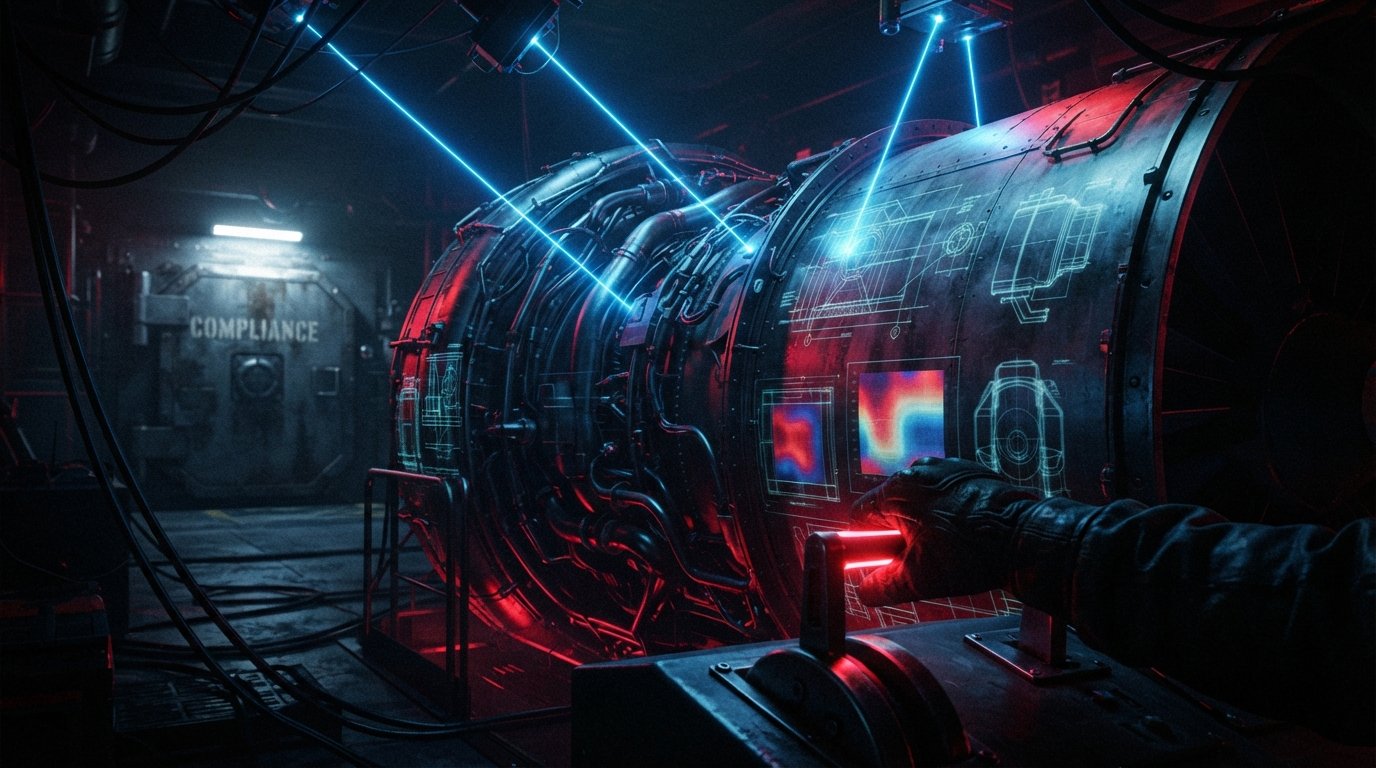
- Multimodal Data Unlocked: Amazon Nova Multimodal Embeddings retrieves insights from engineering diagrams, thermal plots, and product photos, integrating visual and textual data into a unified semantic space for comprehensive analysis.
- Human-in-the-Loop Governance: The system assembles evidence and drafts documents, but the engineer remains the ultimate decision-maker, with built-in audit trails and explicit refusals for substitution approvals, mitigating critical risks.
- Production-Ready Framework: Deployed on AgentCore runtime with robust evaluation capabilities (AgentCore Evaluations), the solution offers serverless scaling, governed data access via AgentCore Gateway, and Cedar policy integration for enterprise-grade security and control.
The AI Strategic Shift
This development signals a profound shift in how regulated industries approach high-stakes engineering decisions, moving from manual, error-prone processes to intelligent, evidence-based automation. By integrating multimodal AI with deterministic code and a human-in-the-loop framework, enterprises can drastically reduce the time and risk associated with critical component substitutions, ensuring compliance and operational integrity. The strategic value lies in accelerating product lifecycles, mitigating supply chain vulnerabilities, and establishing a repeatable, auditable process for decisions that previously relied on undocumented institutional knowledge. This architecture sets a new standard for trusted AI deployment in mission-critical environments.
Strategic Analysis
The introduction of a multi-agent engineering assistant for aerospace component substitution, powered by Amazon Bedrock AgentCore and Nova Multimodal Embeddings, represents a significant architectural evolution for enterprise AI. Historically, critical engineering decisions, especially in regulated sectors like aerospace, have been bottlenecked by manual data cross-referencing across disparate, often visual, sources. This solution directly addresses that by creating a unified semantic space for both text and visual data (diagrams, thermal plots, product photos) via Nova Multimodal Embeddings, enabling retrieval capabilities that text-only systems simply cannot match. This capability is a breakthrough for operational scalability, allowing engineers to cut days of research into minutes, thereby accelerating design cycles and reducing time-to-market for new products or modifications.
A core advantage lies in its hybrid AI architecture. While large language models (LLMs) handle complex tasks like routing (Claude Haiku), specialist execution (Claude Sonnet), and synthesis (Claude Opus), the critical pass/fail verdicts for component fit are explicitly handled by deterministic Python code. This design choice is paramount for high-stakes applications, directly mitigating the critical flaw in agentic AI concerning hallucination and ensuring compliance with stringent standards like AS9100. The human-in-the-loop model, where the engineer remains the ultimate decision-maker and the system only assembles evidence, further reinforces trust and accountability, transforming AI from an autonomous approver into an indispensable, intelligent co-pilot.
Furthermore, the robust production scaffolding provided by Amazon Bedrock AgentCore—including runtime hosting, governed data access via AgentCore Gateway (for both internal knowledge bases and live web data), and continuous evaluation capabilities—is crucial for enterprise adoption. This framework allows for the deployment of complex agentic systems at scale, with built-in observability and governance. The ability to ground lifecycle claims in live web data via the AgentCore Gateway is a subtle yet powerful feature, ensuring that decisions are based on the most current information, a vital aspect in managing supply chain risks. The pattern’s reusability across other part categories and engineering domains underscores its foundational value, offering a blueprint for broader strategic AI deployment within manufacturing and engineering. This is not merely an incremental improvement; it’s a redefinition of the engineering workflow, embedding intelligence and auditability at every critical juncture.
The Bottom Line and ROI Potential
This innovation fundamentally redefines the operational intelligence landscape for complex engineering, particularly in regulated industries. Leaders must recognize that the era of purely text-based AI for critical decision support is evolving; multimodal and hybrid AI architectures are now essential for unlocking deep insights from diverse data types and ensuring trusted outcomes.
Here are concrete steps for your enterprise:
- Pilot Multimodal Agents: Identify a high-friction, high-value engineering or manufacturing workflow within your organization that involves complex visual and textual data. Initiate a pilot program to deploy a similar multi-agent, human-in-the-loop system, focusing on evidence assembly rather than autonomous decision-making.
- Invest in Data Strategy for Multimodality: Assess your current data infrastructure for its ability to ingest, index, and retrieve multimodal assets (images, diagrams, 3D models, alongside text). Prioritize investments in vector databases and multimodal embedding models to create a unified semantic search capability.
- Establish Hybrid AI Governance: Develop clear guidelines and architectural patterns for integrating deterministic code with generative AI. Define where LLMs can synthesize and route, and where rule-based systems must enforce critical thresholds and compliance, ensuring auditability and accountability.
- Leverage AgentCore for Production: Explore platforms like Amazon Bedrock AgentCore for their robust capabilities in agent orchestration, governance, and evaluation. This provides the necessary scaffolding for moving agentic AI from proof-of-concept to scalable, production-ready solutions.
The ROI potential is immense: expect significant reductions in engineering cycle times (potentially 50-90% for specific tasks), enhanced compliance posture through auditable decision trails, and a substantial decrease in the risk of costly errors or mission failures. This proactive adoption will not only drive operational efficiency but also establish a formidable competitive advantage by accelerating innovation and resilience in your supply chain.
Leave a Reply